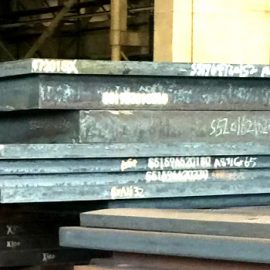

ASME SA537 Class 3: define the Code delivery and acceptance route
For an ASME SA-537 Class 3 plate enquiry, documentary acceptance should be settled before a strength table is used to compare offers. Gangsteel’s enquiry review needs SA-537 or SA-537M, Class 3, and the governing Code year or Section II-A edition, followed by the size schedule and required evidence. A familiar material name without that edition information does not define the project’s complete acceptance basis.
This page addresses Code-oriented delivery review, separately from the ASTM product specification. The named-Code SA-537 full text has not been inspected, and no current Code year is assigned here. The mechanical information provided below is a family public reference from official ASTM A537/A537M-20 Scope, not a named-Code official SA-537 extract. The purchaser must confirm the applicable requirements in the edition governing the project.
Agree the order identity and document responsibilities
| Decision | Required information | Purpose |
|---|---|---|
| Governing documents | SA-537 or SA-537M, Class 3; Code year or Section II-A edition | Identify the contractual material requirement |
| Units and size list | Inch-pound or SI; thickness, width, length and quantity | Keep each purchase line reviewable |
| Material condition | Required quenched-and-tempered delivery condition and relevant fabrication constraints | Define the state represented by the evidence |
| Tests and reports | Required examinations, criteria and report details | Separate base requirements from purchaser additions |
| Certificate route | Agreed document form, plate identification and review responsibility | Avoid unsupported assumptions about certification |
An ASTM A537 Class 3 certificate is not by itself SA-537 acceptance. The reverse is not automatic either. If the project requires both designations, dual certification must be agreed and supported by evidence for both requirements. Do not treat a changed document heading as the technical review. Any proposed deviation in edition, class, condition or reporting needs an explicit purchaser decision before it is accepted.
A practical material schedule links every plate line to its document requirement. When sizes or conditions vary, keep those differences visible instead of describing the entire order as one undifferentiated lot. Identify who resolves incomplete reports and how the disposition will be recorded. This makes the receiving review a comparison with the agreed order rather than an attempt to reconstruct requirements after delivery.
Family mechanical reference: retain the class and thickness basis
The independently checked ASTM family Scope assigns Class 3 to quenching and tempering. Its minimum strengths are reproduced as family public references below. They help frame the enquiry but do not establish which ASTM edition a particular Code year adopts. Inch-pound and SI values are independent unit systems; use one system consistently rather than combining rounded values or re-converted thickness boundaries.
| Reference thickness interval | Yield minimum | Tensile minimum | Tensile maximum | Elongation |
|---|---|---|---|---|
| 2 1/2 in. and under [65 mm and under] | 55 ksi [380 MPa] | 80 ksi [550 MPa] | ||
| Over 2 1/2 to 4 in. [over 65 to 100 mm] | 50 ksi [345 MPa] | 75 ksi [515 MPa] | ||
| Over 4 in. [over 100 mm] | 40 ksi [275 MPa] | 70 ksi [485 MPa] |
Only the public Scope minima are shown. Official tensile maxima and elongation requirements were not inspected and remain blank; the blanks are not acceptance waivers. Ask for the full requirements from the governing documents and compare the supplied results on the appropriate basis. A result meeting a minimum printed on this page does not demonstrate that all contractual material requirements have been satisfied.
The same official ASTM family Scope lists Class 2 as quenched and tempered, with the same tensile minima but higher yield minima in each of the three bands. Thus the shared treatment category does not make Class 2 and Class 3 interchangeable, and Class 3 should not be described as generally lower in tensile strength. The related ASME SA537 Class 2 page provides a separate purchasing topic, not the numerical source or approval basis for a Class 3 order.
Resolve chemistry and condition evidence in the governing edition
The official ASTM family abstract describes killed steel, heat and product analyses, and tension testing. It does not provide numerical chemical limits in the public text used here. Official SA-537 Table 1 has not been inspected, so no heat or product chemistry limits are asserted on this page. The correct next step is a review against the named governing edition, not filling a chemical table from another class’s commercial data.
Keep heat analysis and product analysis identified in the document review. They answer different reporting questions and should not be collapsed into an unexplained list of percentages. Where a purchaser requests restricted chemistry, state the element, analysis basis and proposed limit for technical review. A special request is not established as a standard Class 3 property merely because it appears on an enquiry attachment.
Quenched and tempered is the confirmed family treatment category, but no quench or temper temperatures are reproduced here. A process recipe cannot be inferred from the class number or from an adjacent class’s description. Define any treatment-record requirement and relevant subsequent fabrication condition during contract review, then establish what supporting results are required. This page does not provide welding settings, default impact criteria or a promised inspection package.
Use a document-release checklist, not strength alone
| Review stage | Evidence to reconcile | Open issue to close |
|---|---|---|
| Identification | Plate identity and heat reference against the material schedule | Unlinked plate or report references |
| Specification basis | Required SA designation, class and governing edition | ASTM-only documents or an unspecified edition |
| Chemistry and condition | Applicable analysis basis and agreed delivery state | Missing limits, condition or supporting information |
| Mechanical reporting | Correct thickness band and complete required results | A partial minimum-strength comparison |
| Additional requirements | Agreed examinations, certificate form and witnessing | Assumed extras not defined by the contract |
Thickness also needs the correct interpretation. The family public Scope limits maximum thickness by the capacity of the material to meet its specified mechanical properties. The 4 in. [100 mm] boundary is a mechanical band break, not a universal cap. No numerical coverage cap or rolling capability is claimed here. Review the requested size together with the required condition and complete acceptance criteria rather than reading availability into a specification table.
For the separate ASTM specification topic, see ASTM A537 Class 3 plate. This is related guidance, not a substitute for Code review. An ASTM product order and an ASME acceptance schedule can require different documentary decisions even when a family reference is shared. Keep unresolved items visible in the quotation review and avoid treating the two acceptance routes as interchangeable.
Buyer questions
What must be specified before reviewing an SA-537 Class 3 offer?
Name SA-537 or SA-537M, Class 3, the governing Code year or Section II-A edition, unit system, dimensions, delivery condition, tests and certificate form. This page does not nominate a current Code year; the project must establish that requirement.
Are the mechanical values here a verified SA-537 Code table?
No. They are clearly labelled family public references from official ASTM A537/A537M-20 Scope. The named-Code SA text was not inspected. Confirm the complete requirements in the governing edition before using results for material acceptance.
Can Class 2 replace Class 3 because both are quenched and tempered?
Not automatically. The ASTM family Scope gives them the same tensile minima but different yield minima, with Class 3 lower in each band. Any change of class requires the project’s material review; a shared treatment category does not authorize substitution.
Do blank chemistry and elongation entries remove those requirements?
No. They identify information not established from the public evidence used for this page. Obtain the applicable full requirements and supporting reports under the governing order. Do not interpret an unprinted limit as zero, unrestricted or unnecessary.
Is an ASTM Class 3 certificate enough for the Code order?
Not by itself. Supporting documentation must establish the required SA designation and governing-edition conformity. Dual certification is not automatic, nor is the reverse ASTM acceptance automatic. Agree the document route and any additional evidence before purchase approval.
Send an SA-537 Class 3 acceptance schedule
Provide the governing edition, material designation, size list, unit system and required condition. Attach the testing and document requirements and flag any proposed alternatives so the enquiry can be reviewed against the actual Code-delivery basis.